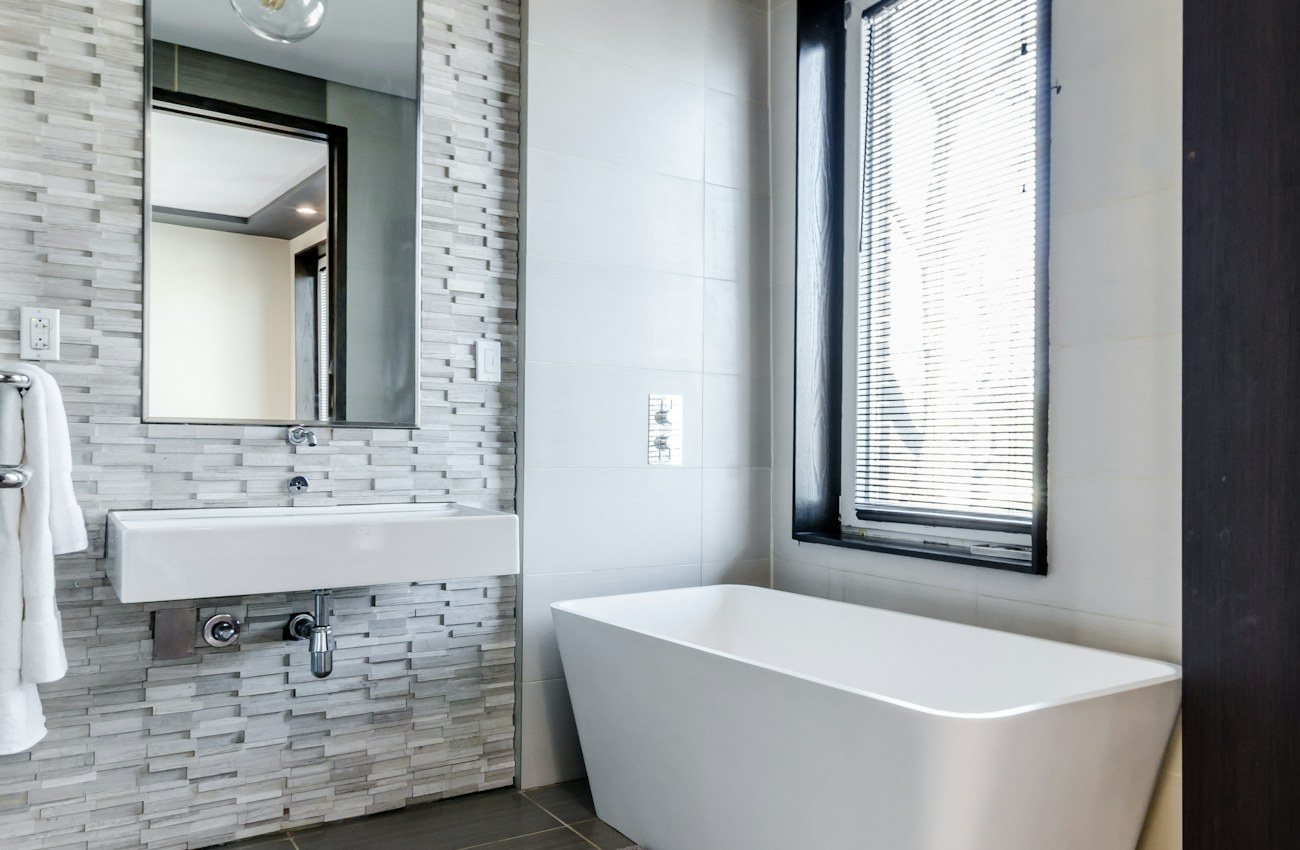
A compact bathroom can feel generous when every choice has a purpose. The goal is not to fill the room with clever tricks, but to remove visual noise, improve movement, and create a calm place to begin and end daily routines.
These design ideas focus on the decisions that make the biggest difference in a smaller footprint.
Start with a realistic layout
Before choosing tiles or fixtures, study how the room is used. Door swings, shower clearance, towel reach, storage access, and the space needed to stand at the basin all affect comfort. A beautiful bath that feels awkward to use will never feel luxurious.
Sometimes the best change is a different configuration. A wall-hung vanity, a corner shower, a sliding pocket door, or a slightly repositioned fixture can open valuable floor space without reducing function.
Use large-scale surfaces with restraint
Continuous surfaces help small rooms feel less fragmented. Larger tiles, a single wall color, and a simple glass shower screen can reduce visual interruptions. That does not mean the room must be plain. Texture, veining, handmade tile variation, and warm metal details can add depth without clutter.
- Extend the same floor tile into the shower where practical.
- Choose a restrained palette and vary tone through texture instead of busy pattern.
- Use mirrors to reflect light and expand the sense of space.
- Keep fixtures proportionate to the room so circulation stays comfortable.
Small bathrooms feel bigger when the eye can travel smoothly and the body can move freely.
Make storage feel architectural
Freestanding storage can quickly crowd a compact bath. Recessed niches, mirrored cabinets, and vanities with well-organized drawers keep everyday items close without adding visual bulk. Decide what truly needs to live in the room, then design storage around those items.
Open shelving can be beautiful, but it requires disciplined editing. If you prefer a calmer look, combine a small display shelf with concealed storage for practical essentials.
Layer light carefully
Good bathroom lighting needs to support both grooming and relaxation. A soft general light paired with even illumination around the mirror creates a space that feels clear without becoming harsh. Dimmers and warmer accent lighting can make evening routines feel more restful.
Natural light is valuable, but privacy matters. Frosted glazing, textured glass, or well-placed window coverings can preserve daylight without making the room feel exposed.
Choose fixtures that earn their place
Water-wise taps and showers can support efficiency while maintaining a comfortable experience. Consider cleaning and maintenance as part of the selection process: simple forms, durable finishes, and accessible drains make daily life easier.
In a small bathroom, every visible object contributes to the design. Coordinate towel rails, robe hooks, hardware, and lighting so the room reads as a considered composition.
Finish with a sense of calm
Plants that enjoy humidity, soft textiles, a favorite piece of art, and a gentle fragrance can make a bathroom feel personal. Keep the final layer edited and allow some clear surfaces to remain.
With a thoughtful layout, cohesive surfaces, and lighting that flatters the space, a compact bathroom can become among the most enjoyable rooms in the home.